Indian Scientists Develop Supercomputer-Based Simulation Explaining Mpemba Effect
06Jan
In News : Indian Scientists Develop Supercomputer-Based Simulation Explaining Mpemba Effect
Analysis
- Indian scientists have developed the first supercomputer-powered simulation to explain the long-standing paradox where hot water freezes faster than cold water, commonly known as the Mpemba effect.
- The Ministry of Science and Technology stated that this phenomenon had been difficult for scientists to model accurately until now.
- Researchers from the Jawaharlal Nehru Centre for Advanced Scientific Research (JNCASR) employed supercomputing resources to build a detailed simulation of ice formation, successfully capturing the Mpemba effect in water and demonstrating that similar behaviour can manifest in fluid-to-solid transitions in other systems.
- The research outcomes have been published in the Journal of Communication Physics, providing peer-reviewed scientific validation.
- This breakthrough offers a computational framework for studying phase transitions and may influence future research in thermodynamics and materials science.
Static Part: Supercomputing and Related Concepts
What is Supercomputing?
- Supercomputing refers to high-performance computing (HPC) using powerful computing systems called supercomputers, designed to perform extremely large calculations more quickly than standard computers. Supercomputers are composed of advanced processor cores, memory systems, interconnects and I/O capabilities.
Supercomputing and Artificial Intelligence
- Supercomputers are frequently used to run artificial intelligence (AI) and big data applications because of their ability to handle massive computational workloads efficiently.
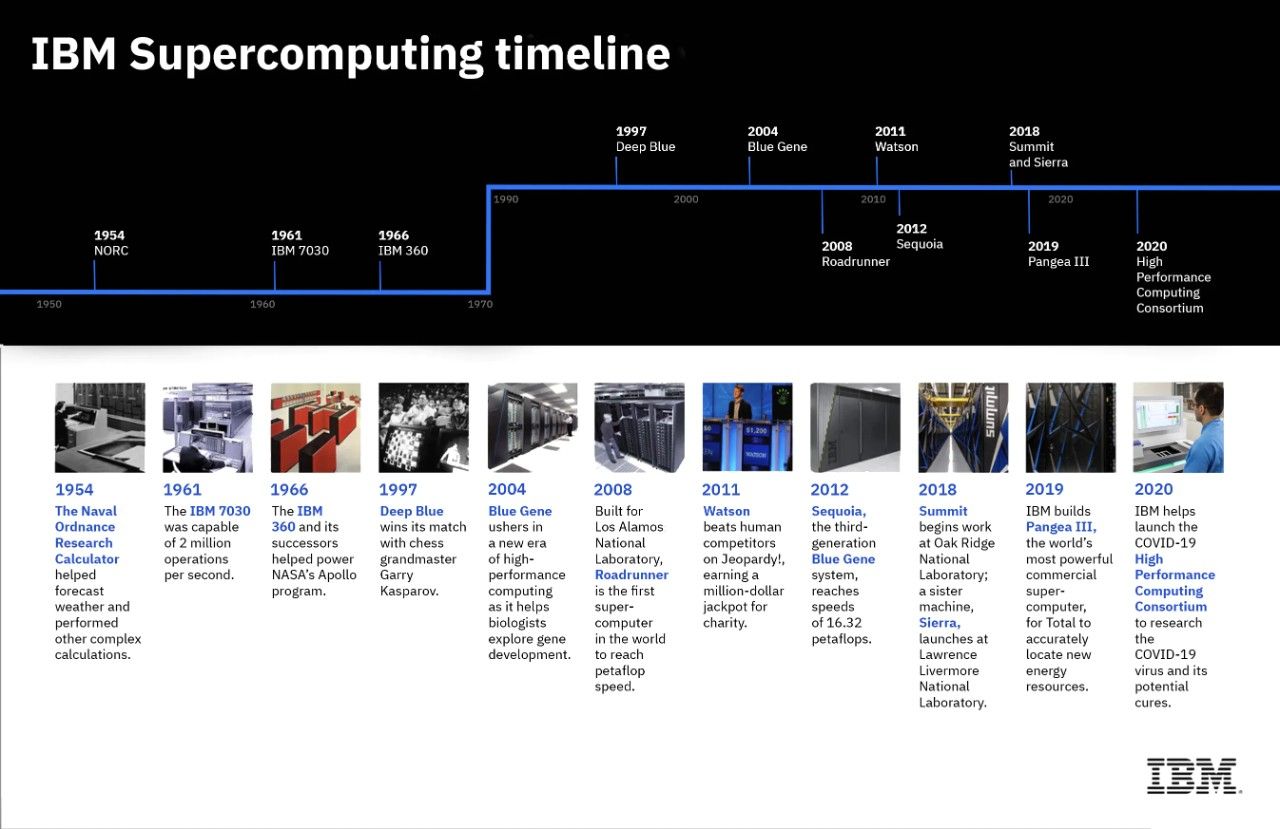
- For example, IBM’s Summit and Sierra supercomputers are engineered for big data and AI workloads, supporting scientific endeavours like modeling cosmic phenomena, exploring new materials, and advancing medical and environmental research.
Speed of Supercomputing
- Performance is measured in floating-point operations per second (FLOPS).
- A petaflop equals one quadrillion (10¹⁵) operations per second, and supercomputers can deliver performance millions of times greater than the fastest consumer laptops.
History of Supercomputing
- Supercomputing evolution began with early digital systems like the Colossus computer of the 1940s.
- The term “supercomputer” entered common use in the early 1960s with machines such as the IBM 7030 Stretch and UNIVAC LARC.
- Government investment in high-performance computing for scientific and defence applications significantly shaped the field’s growth.
India and Supercomputing
- In India, C-DAC (Centre for Development of Advanced Computing) launched its first HPC mission in 1988, subsequently developing the PARAM series of supercomputers, marking milestones in national computing capability.
- PARAM 8000 (1990) was India’s first giga-scale supercomputer.
Mpemba Effect
- The Mpemba effect is the phenomenon where, under certain conditions, hot water can freeze faster than cold water.
Key Personalities in Supercomputing
- Seymour Cray
- Widely known as the “Father of Supercomputing”.
- Designed the world’s first commercially successful supercomputer, CDC 6600 (1964).
- Revolutionised high-performance computing (HPC) through innovative processor design and parallelism concepts.
- Dr. Vijay P. Bhatkar (India)
- Known as the “Father of the Indian Supercomputer”.
- Led the development of India’s indigenous PARAM series of supercomputers under C-DAC.
- PARAM 8000 (1990) marked India’s entry into giga-scale supercomputing and technological self-reliance.
Updated – 06 January 2026; 8:34 PM | News Source:News on Air
Additional Reference Sources (Background Reading):
IBM – Supercomputing Explained
C-DAC – PARAM Supercomputing Systems
Mpemba Effect – Mathematical & Physical Explanation
Comments