Celebrating World Rhino Day – Assam’s Leadership in Rhino Conservation
IN NEWS: Celebrating World Rhino Day – Assam’s Leadership in Rhino Conservation
Introduction
World Rhino Day is observed annually on 22 September to raise global awareness about the conservation of rhinos. India, particularly Assam, has emerged as a global leader in conserving the Greater One-Horned Rhinoceros, making it highly relevant for competitive examinations.
Analysis
Ecological Significance of Rhinos
Rhinos are mega-herbivores, playing a crucial role in maintaining ecosystem balance. Through grazing, they regulate grasslands, and their wallowing behavior creates water bodies that support other species. Thus, rhinos are essential for biodiversity conservation and ecosystem sustainability.
Asian Rhino Species: Comparative Overview
| Species | Key Feature |
|---|---|
| Indian Rhino | Single horn, largest Asian species |
| Javan Rhino | Single horn, critically endangered |
| Sumatran Rhino | Two horns, smallest |
India’s Rhino Conservation: A Success Story
India’s conservation of the Greater One-Horned Rhinoceros is considered a global success story:
- Population increased from ~1500 (1980s) to 4000+ (2024)
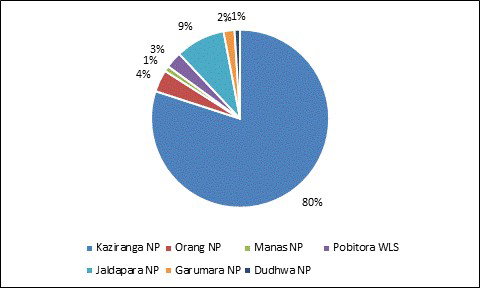
- Around 80% of global population in Assam
- Nearly 70% in Kaziranga National Park
This reflects strong policy support, scientific management, and community participation.
Kaziranga Model of Conservation
The Kaziranga Model is globally recognized and includes:
- Strict anti-poaching measures (smart patrolling, armed guards)
- Scientific habitat management
- Community involvement
- Eco-tourism revenue reinvestment
It represents a successful integration of policy, protection, and people participation.
Government Initiatives and Achievements
Key achievements in rhino conservation include:
- Population Growth: 600 (1960s) → 4000+ (2024)
- Habitat Expansion: Expansion in Orang NP and Laokhowa–Burachapori
- New Protected Areas: Siknajhar NP, Poba Wildlife Sanctuary
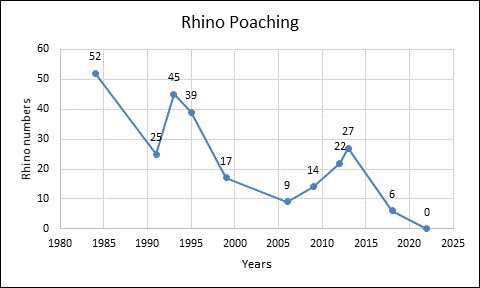
- Zero Tolerance to Poaching: Burning of 2,479 rhino horns
- Tourism Development: Kaziranga as a global eco-tourism hub
Legal and Policy Framework
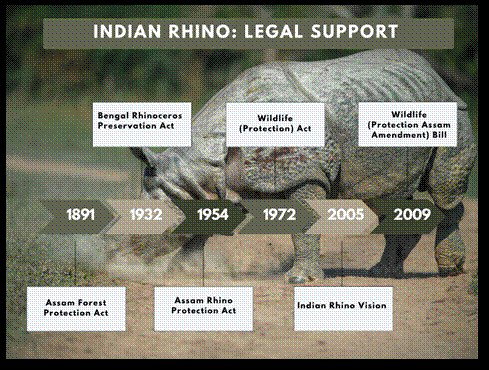
| Law | Year | Provision |
|---|---|---|
| Assam Forest Protection Act | 1891 | Early conservation step |
| Bengal Rhinoceros Preservation Act | 1932 | Ban on hunting |
| Assam Rhino Protection Act | 1954 | Strengthened protection |
| Wildlife (Protection) Act | 1972 | National-level strict penalties |
| Assam Amendment | 2009 | Life imprisonment provisions |
Additionally, Indian Rhino Vision 2005 strengthened conservation efforts.
Key Challenges
Despite success, several threats persist:
- Poaching & Illegal Trade
- High demand for rhino horn (China, Vietnam)
- ~10,000 rhinos killed globally in the last decade
- Habitat Constraints
- Growing population vs limited habitat
- Climate Change
- Floods, invasive species, habitat degradation
- Human-Wildlife Conflict
- Encroachment near agricultural areas
Implications
- Environmental: Strong case of biodiversity conservation
- Economic: Boost to eco-tourism and local livelihoods
- Social: Community-based conservation success
- Global: India as a leader in wildlife conservation
Static Part (As per Input)
Kaziranga National Park
- Location: Assam
- Importance: Hosts ~70% of global Greater One-Horned Rhino population
- Status: UNESCO World Heritage Site
- Function: Wildlife conservation, biodiversity protection, eco-tourism
Indian Rhino Vision 2005
- Objective: Expand rhino population and habitat
- Focus: Assam-based conservation strategy
Conclusion
World Rhino Day highlights both achievements and challenges in rhino conservation. Assam’s success, especially through the Kaziranga Model, demonstrates that strong governance, scientific planning, and community participation can ensure effective wildlife conservation.
Updated - 22 September 2024 ; 11:49 AM | PIB