Glacial Lake Outburst Floods (GLOFs)
Glacial Lake Outburst Floods (GLOFs)
Definition:
GLOFs are sudden, catastrophic releases of water from glacial lakes, typically caused by the failure of natural moraine or ice dams. They result in rapid downstream flooding, causing extensive geomorphic changes and socio-economic damage.Key Features:
- Sudden or cyclic release of water.
- Rapid events lasting hours to days.
- Large increase in downstream river discharge.
Significance:
- Historically, some of the largest floods on Earth were GLOFs.
- Cause landscape transformation and can influence regional climate through freshwater influx.
- Socio-economic impact: Peru recorded ~32,000 deaths in the 20th century; infrastructure like roads, bridges, and hydro projects are destroyed.
- Increasing hazard due to glacial retreat and human encroachment in high-altitude regions.
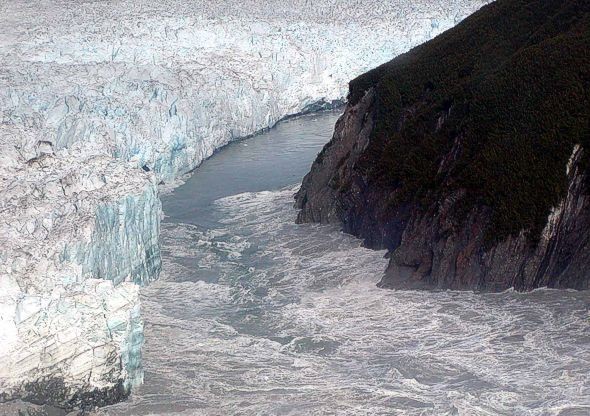
Types of Glacial Lakes:
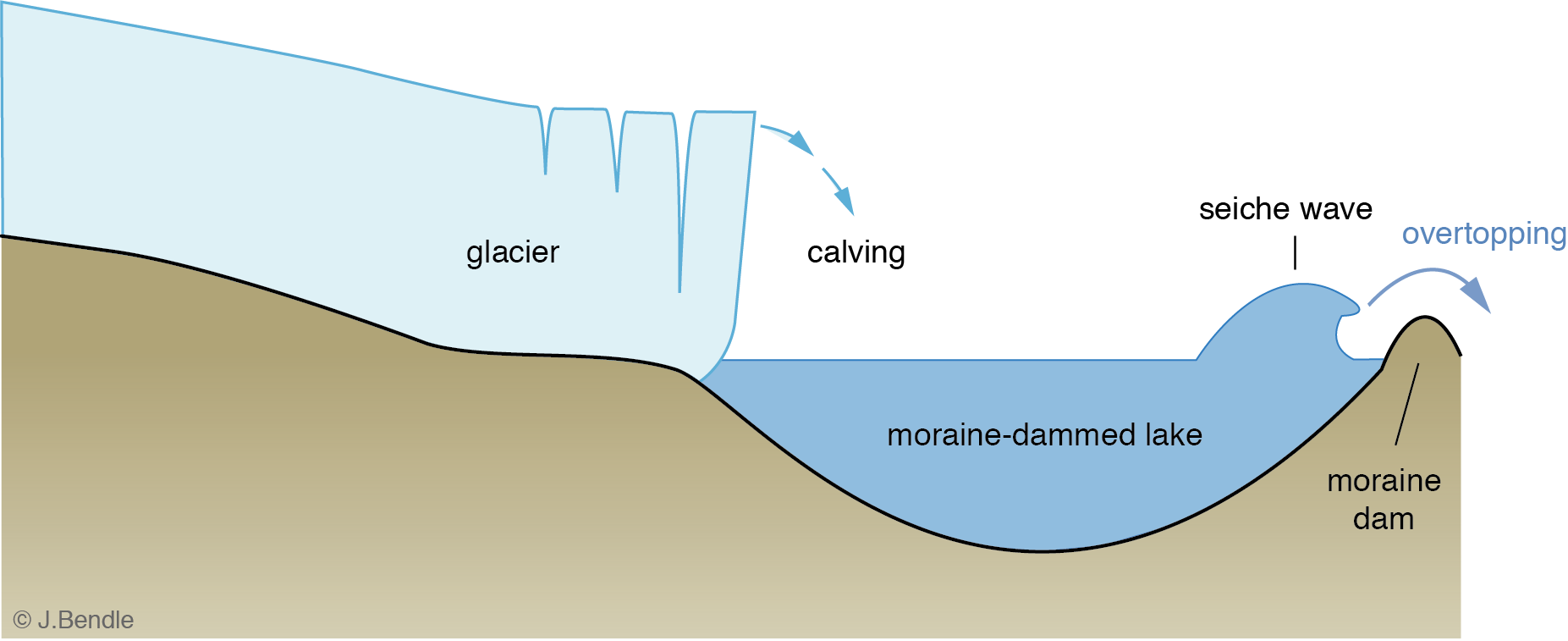
1. Moraine-dammed Lakes:
- Form behind unconsolidated moraine ridges during glacier retreat.
- Example: Imja Tsho, Nepal (rapidly growing due to glacier retreat).
- Vulnerable due to loose sediments and ice cores.
2. Ice-dammed Lakes:
- Form when glaciers block meltwater drainage.
- Growth depends on glacier mass balance and climatic conditions.
- Drainage occurs via subglacial conduits, ice flotation, or overspilling.
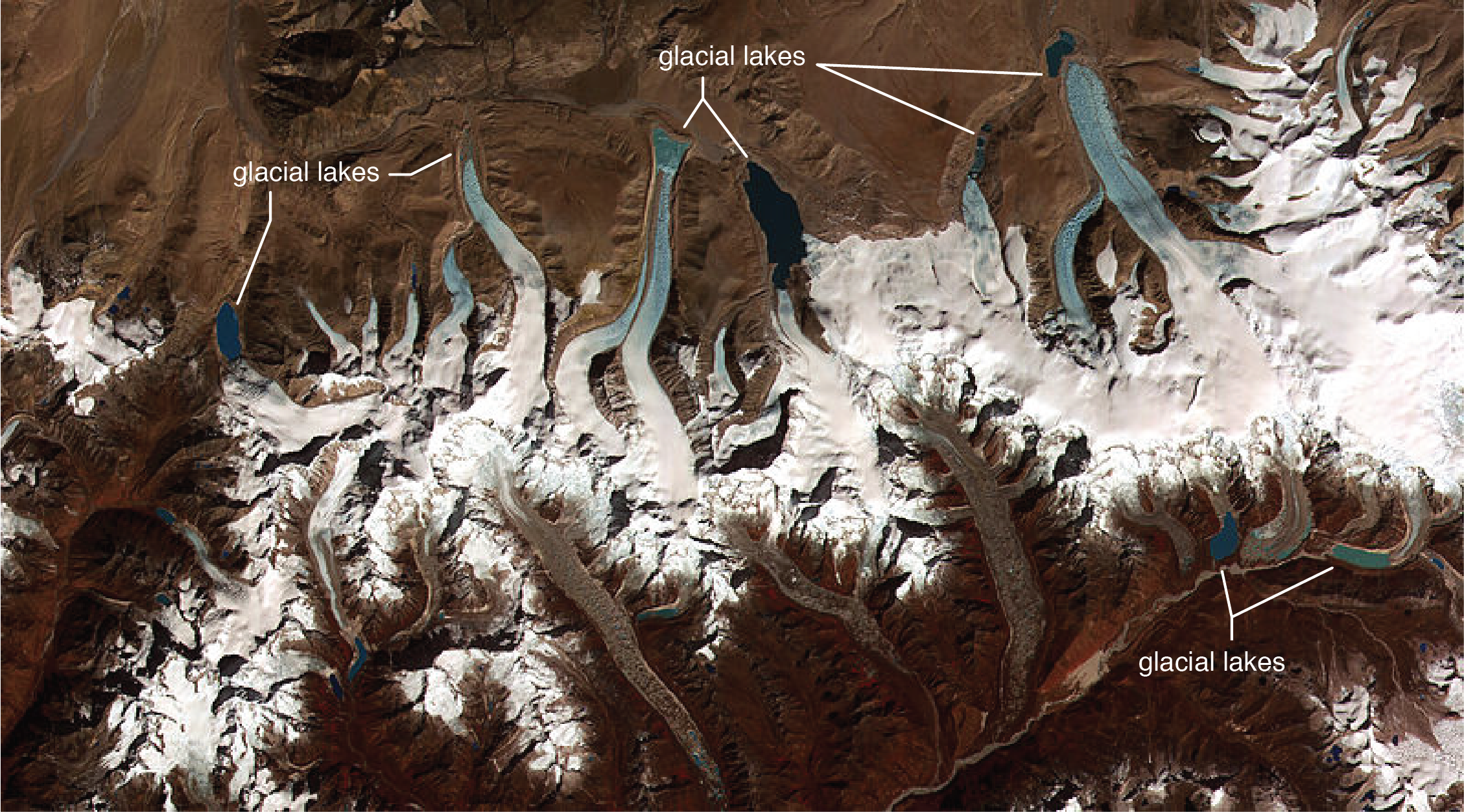
Causes / Trigger Mechanisms:
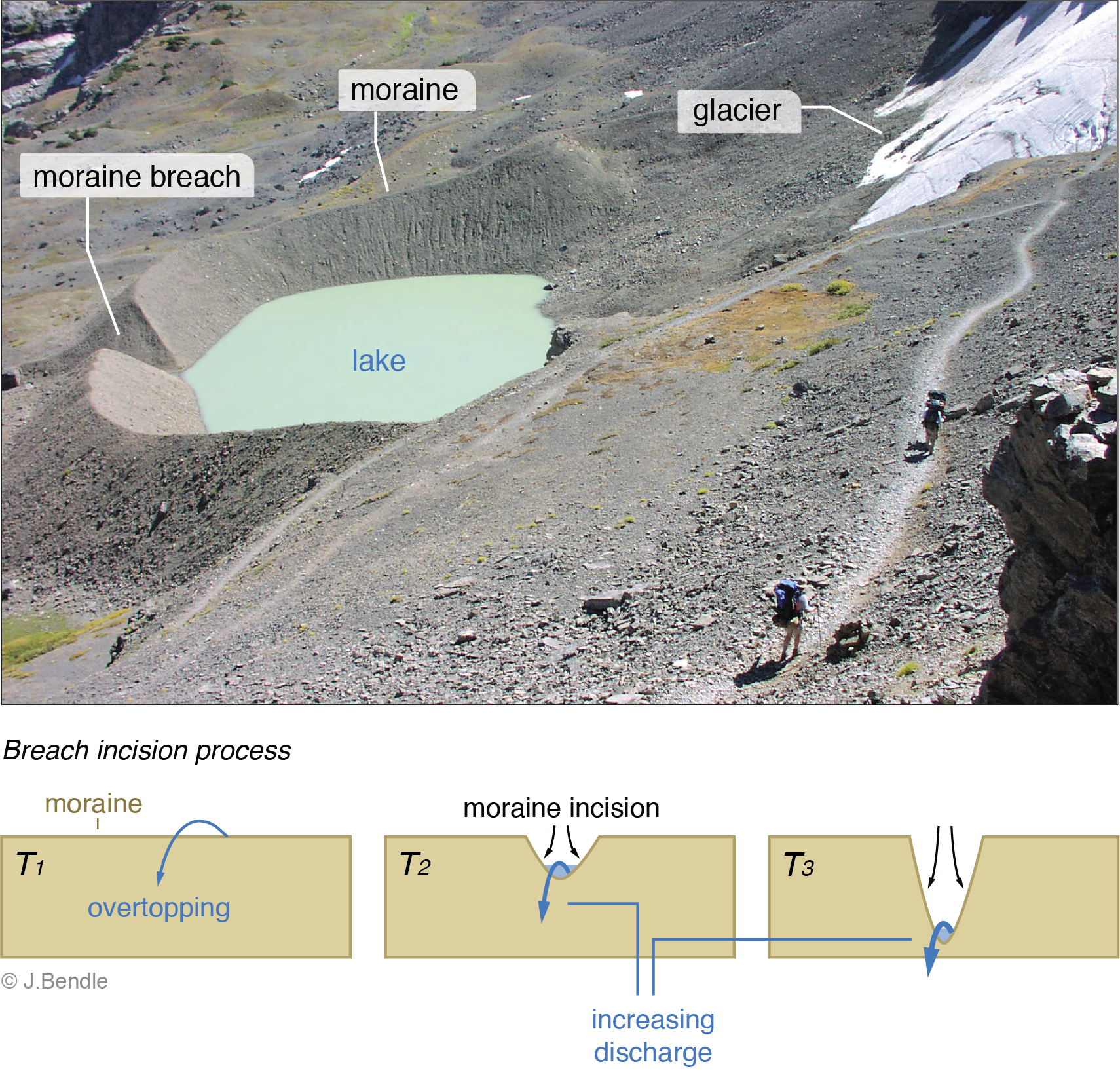
A. Moraine-dam Failure:
- Displacement waves: Avalanche, rockfall, or calving causes overtopping.
- Rapid meltwater inflow: Sudden glacier melting or heavy rainfall.
- Seismic activity: Earthquakes destabilize moraines.
- Breach incision: Erosion of overtopped moraine amplifies outflow.
- Moraine degradation: Piping (water seepage) or ice-core melting weakens structure.
B. Ice-dam Failure:
- Subglacial drainage: Water escapes via conduits; may refill repeatedly.
- Ice flotation: Water lifts ice dam when hydrostatic pressure exceeds ice overburden.
- Overspilling: Lake rises due to rainfall/snowmelt, especially at cold-based glaciers.
Differences Between Moraine- and Ice-dammed GLOFs:
| Feature | Moraine-dammed | Ice-dammed |
|---|---|---|
| Flood magnitude | Higher | Lower |
| Dam destruction | Usually destroyed | Often survives |
| Recurrence | Low | High (can refill) |
| Trigger sensitivity | Avalanche, meltwater, rainfall, earthquakes | Subglacial conduits, flotation, overspill |
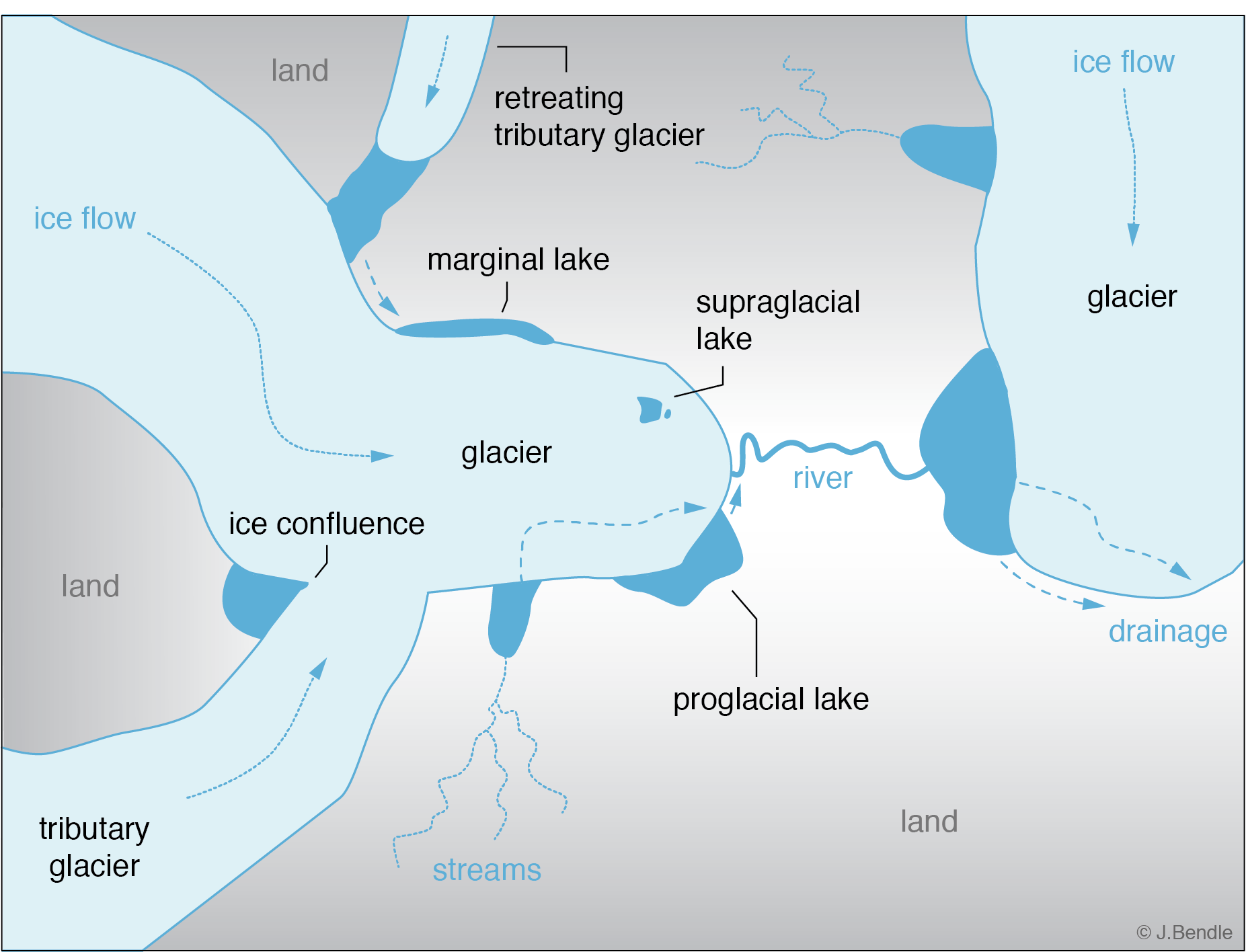
Future Trends:
- Moraine-dammed GLOFs likely increase during glacier retreat, but will decline over time as moraines fail permanently.
- Ice-dammed GLOFs may continue recurrently without destroying the dam.
- Climate change accelerates glacial melt, increasing GLOF risk in vulnerable mountain communities.
UPSC BPSC MPPSC UPPSC RPSC JPSC TNPSC WBCS SSC CGL RRB NTPC GLOF Glacial Lake Outburst Flood Glacier Glacial Lakes Moraine-dammed Lake Ice-dammed Lake Climate Change Disaster Management Natural Hazards Environmental Geography Physical Geography Himalayan Floods Imja Tsho Lago Cachet Dos Hubbard Glacier Geomorphology RD Sir Quant King EMINENT IAS Glacial Lake Outburst Floods Moraine-dammed Lakes Ice-dammed Lakes Himalayan Glaciers Glacier Retreat NDMA Flood Mitigation Early Warning Systems Subglacial Drainage Moraine Failure Ice Dam Flotation Breach Incision Cloudbursts Flash Floods Mountain Hazards South Lhonak Lake Kedarnath Floods Himalayan Hazards UPSC Mains GS Paper 1 GS Paper 3 UPSC PYQs Environmental Hazards Himalayan Disaster Risk Infrastructure Damage Lives Lost Flood Management Community Preparedness RDSIR
Comments