Grand Ethiopian Renaissance Dam saddle dam flagged as geohazard hotspot with potential downstream risks
IN NEWS: Grand Ethiopian Renaissance Dam saddle dam flagged as geohazard hotspot with potential downstream risks
ANALYSIS
Introduction
A recent study published in the International Journal of Disaster Risk Reduction (March 2026) has raised serious concerns regarding the structural stability and geotechnical risks associated with the saddle dam of the Grand Ethiopian Renaissance Dam (GERD). The findings highlight potential risks to Sudan and Egypt, making it a critical issue in the context of transboundary water governance and dam safety.
Understanding the Issue
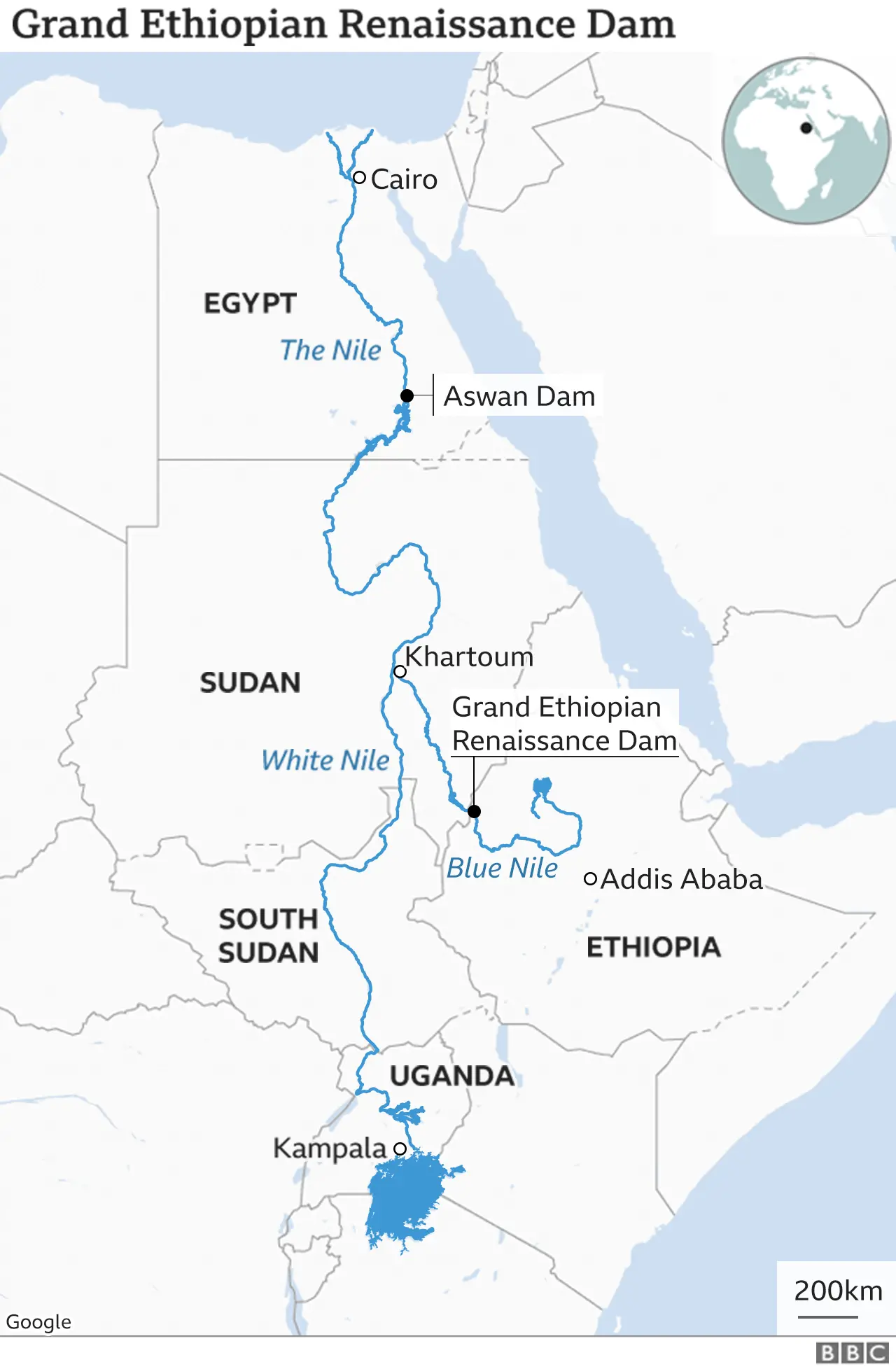
GERD, located on the Blue Nile, includes a massive auxiliary (saddle) dam:
- Approx. 5 km long and 50 m high
- Holds nearly 89% of the reservoir’s live storage
- One of the largest saddle dams globally
This makes the saddle dam structurally critical, as its failure could trigger catastrophic consequences downstream.
Key Findings of the Report
1. Signs of Structural Instability
- Satellite-based analysis detected:
- Up to 40 mm deformation
- Evidence of seepage and leakage pathways
- Indicates weakening structural integrity
2. Groundwater Infiltration
- Estimated infiltration: ~41 billion cubic meters (BCM)
- Formation of new water zones near dam → possible seepage channels
3. Reservoir-Induced Seismicity
- Statistical analysis shows:
- Increase in seismic activity
- Link with reservoir filling and tectonic activity
- Raises risk of earthquake-triggered dam failure
4. Geological Vulnerability
- Located in tectonically active zone
- Risks include:
- Differential settlement
- Weak fractured foundation
Downstream Impact Assessment
If breach occurs:
- Flood wave timeline:
- Roseires Dam (Sudan) → within 5 hours
- Khartoum → within 3 days
- Flood characteristics:
- Water depth up to 34.7 m
- Flow velocity: 0–6.5 m/s
- Impacts:
- Severe flooding in Khartoum
- Threat to millions in Sudan & Egypt
- Cascading failure risk for downstream dams
Geopolitical & Strategic Implications
1. Transboundary Water Conflict
- GERD already central to Ethiopia–Sudan–Egypt dispute
- Safety concerns intensify trust deficit
2. Water Security Risks
- Blue Nile contributes major share to Nile flow
- Any disruption impacts:
- Agriculture
- Drinking water
- Hydropower
3. Need for Transparency
- Study emphasizes:
- Data sharing
- International cooperation
- Absence of transparency → increases geopolitical tension
Implications
- Dam Safety Concerns: Highlights vulnerability of mega dams in geologically sensitive zones
- Disaster Risk: Potential for large-scale humanitarian crisis
- Climate Change Link: Extreme hydrological events may worsen risks
- Global Lesson: Importance of integrating geotechnical assessments + real-time monitoring
Way Forward (Analytical Insight)
- Strengthening continuous monitoring systems (remote sensing, PSI)
- Revisiting recommendations of International Panel of Experts (IPoE)
- Promoting regional cooperation frameworks
- Ensuring transparent hydrological data sharing
- Conducting periodic independent safety audits
STATIC PART
Grand Ethiopian Renaissance Dam (GERD)
- River: Blue Nile
- Location: Ethiopia
- Type: Hydropower dam
- Significance: Largest dam in Africa
Saddle Dam Features:
- Auxiliary dam supporting reservoir
- Stores major portion of water (89%)
- Critical for structural stability
Blue Nile River
- Origin: Lake Tana (Ethiopia)
- Flows through:
- Ethiopia → Sudan → Egypt
- Joins White Nile at Khartoum → forms Nile River
Report / Study
- Published in: International Journal of Disaster Risk Reduction (March 2026)
- Conducted by:
- Earth System and Data Solutions (ESSDS) Lab, Chapman University (USA)
- Yale University
International Panel of Experts (IPoE) – GERD
- Earlier warned (2013) about:
- Hazardous seepage risks
- Foundation permeability issues
- Differential settlement concerns
Updated - 27 February 2026; 12:42 PM | News Source: Down To Earth