US and Israel Launch Strikes on Iran; Escalation Across West Asia
ANALYSIS
- The United States and Israel executed coordinated military strikes on Iran, hitting strategic sites including Tehran.
- US President Donald Trump termed the operation as “major combat operations” against Iran’s military and strategic capabilities.
- Israeli leadership described the strikes as pre-emptive, asserting that Iran posed a direct threat to both Israel and the US.
- The attacks occurred following unsuccessful diplomatic talks aimed at halting Iran’s alleged nuclear weapons development—a claim Iran denies, stating its nuclear programme is for peaceful purposes.
- Iran responded with retaliatory missile and drone strikes targeting:
- Israeli territory (Beit Shemesh)
- US military infrastructure in Bahrain
- Airports in Dubai and Abu Dhabi
- Bases in Kuwait and attacks in Qatar, Bahrain, UAE, Kuwait
- Multiple Iranian locations struck include Tehran, Karaj, Qom, Kermanshah, Isfahan, and Mahshahr naval and military facilities, with significant structural damage reported.
- Iranian state media confirmed the death of Supreme Leader Ayatollah Ali Khamenei during the US-Israeli assault.
- Civilian casualties include reports of at least 148 deaths at a girls’ school in Minab (not independently verified).
- Regional allies hosting US forces, including Gulf states, experienced security threats and disruptions to civil infrastructure.
- Global reactions varied: the UK emphasised the safety of its nationals; Norway criticised legality of strikes; Australia endorsed US efforts to prevent Iranian nuclear armament.
- Regional Conflagration Risk: Direct US-Iran military engagement significantly escalates instability in West Asia.
- Energy and Trade Disruption: Critical shipping lanes like the Strait of Hormuz face heightened risk, potentially impacting global energy flows.
- Diplomatic Strain: The legality and scope of pre-emptive military action will face international scrutiny.
- Nuclear Proliferation Debate: Iran’s nuclear activities and IAEA access become central to future negotiations.
- Security Realignment: Gulf states hosting foreign militaries are repositioning defensive postures amid escalating tensions.
- Iran – Geographic Neighbours and Borders: Iran borders 7 land countries — Iraq, Turkey, Armenia, Azerbaijan, Turkmenistan, Afghanistan, and Pakistan; and has maritime boundaries influenced by the Persian Gulf and Gulf of Oman. Total neighbouring states including maritime limits are reported as 13.
- Key Cities in News and Significance:
Sahand
- Located in East Azerbaijan province.
- Known for Sahand volcanic mountain.
- Region significant for copper and mineral resources.
- Important for regional agriculture due to volcanic soil fertility.
Karaj
- Near Tehran; major industrial satellite city.
- Hosts manufacturing units, pharmaceuticals, chemicals and food processing industries.
- Located in agriculturally productive Alborz region (fruits, vegetables).
Qom
- Major Shia religious centre and theological hub.
- Politically significant due to clerical establishment.
- Surrounding areas support agriculture and small-scale industries.
Kermanshah (Karman Shah)
- Western Iran, near Iraq border.
- Important for agriculture: wheat, barley, oilseeds.
- Contains oil refineries, petrochemical units, and agro-processing industries.
- Gateway for cross-border trade.
Khomein (Komein)
- Birthplace of Ayatollah Khomeini.
- Agricultural base: cereals and horticulture.
- Small-scale industrial presence.
Isfahan
- Major industrial hub of Iran.
- Hosts steel plants, petrochemical complexes, alloy production and defence manufacturing.
- Significant mineral linkages due to proximity to central Iranian mining belts.
- Agricultural output includes wheat and cotton.
Dezful
- Located in Khuzestan province.
- Major agricultural centre due to irrigation from Dez River.
- Produces sugarcane, wheat, citrus fruits.
- Close to oil-rich Khuzestan region.
Kharg Island
- Strategic oil export terminal in the Persian Gulf.
- Handles majority of Iran’s crude oil exports.
- Critical for Iran’s energy economy and maritime trade.
Minab
- Located in Hormozgan province.
- Agricultural importance: date palms, citrus, vegetables.
- Near Strait of Hormuz, strategic maritime zone.
Konarak
- Coastal town in Sistan-Baluchestan province.
- Hosts military airbase.
- Close to Chabahar Port region (strategic for regional connectivity).
- Fisheries and coastal economy significant.
- Economic and Strategic Importance:
- Iran’s Mineral and Energy Base: Iran is rich in diverse minerals and holds significant natural gas and petroleum reserves; mining remains a strategic economic sector.
- Agriculture: Agriculture remains vital for domestic food security and employment, though constrained by water scarcity and climatic challenges.
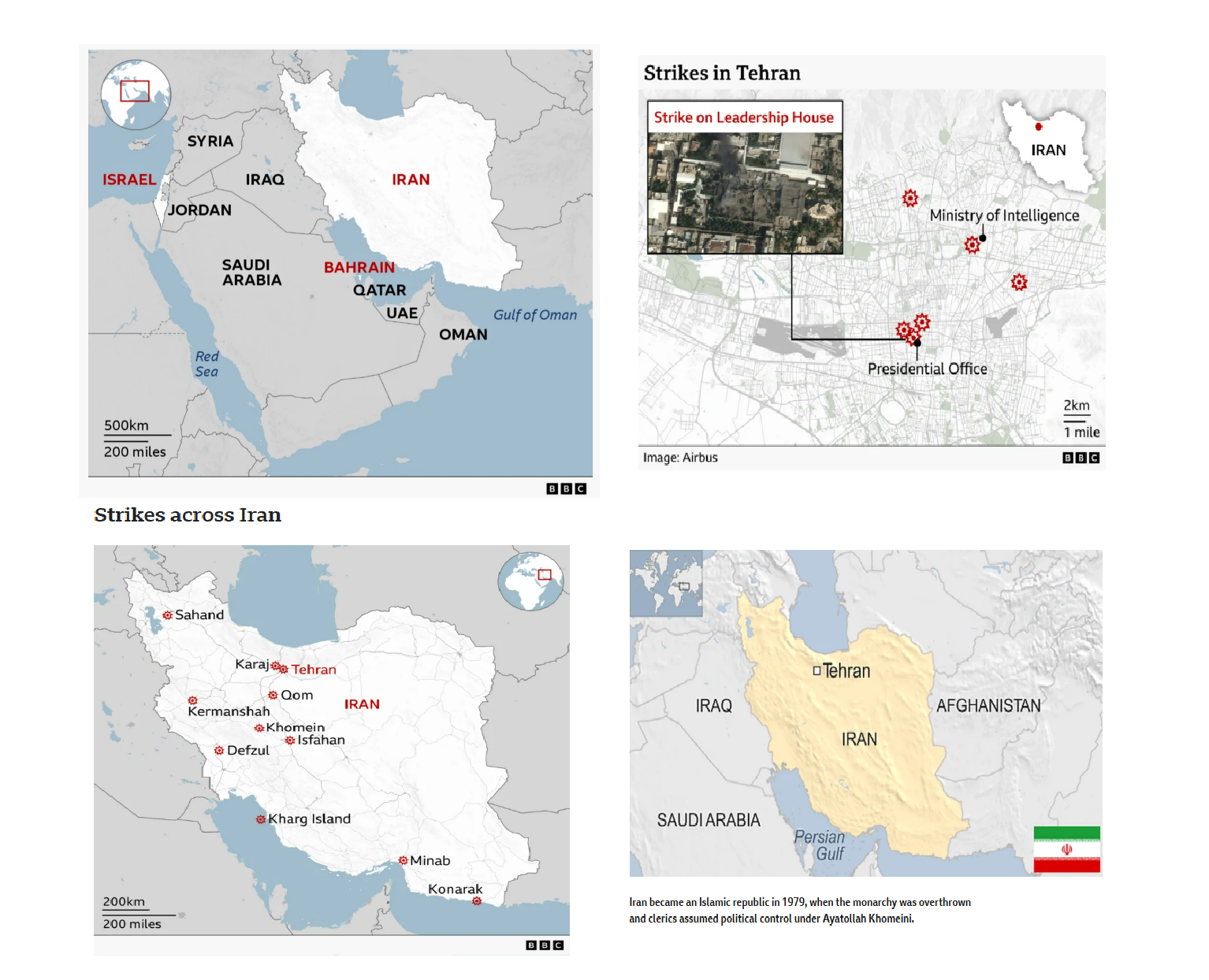
Updated - 28 February 2026 | News Source: BBC
Comments