Cyclone Ditwah Brings Amur Falcons to Point Calimere
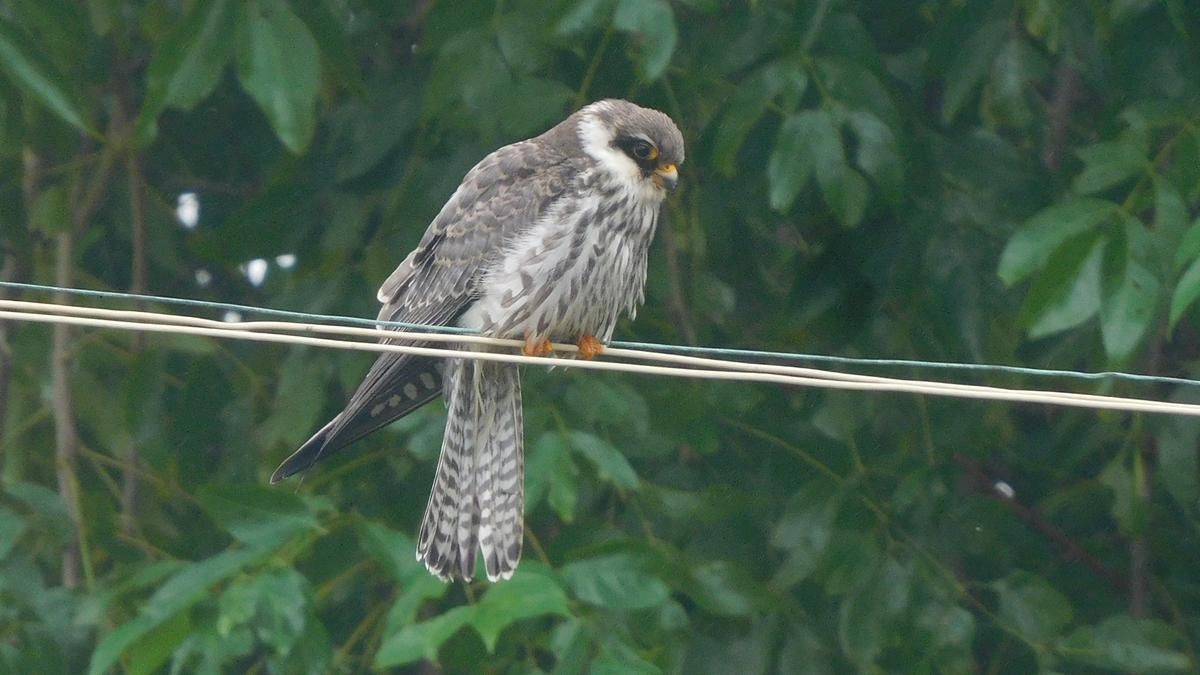
IN NEWS: Cyclone Ditwah Brings Amur Falcons to Point Calimere
Why Amur Falcons in News?
Two female Amur Falcons were spotted at Point Calimere (Kodiyakarai), Tamil Nadu, after being blown off their regular migratory route due to Cyclone Ditwah. Their appearance highlights how extreme weather systems impact bird migration patterns.
What are Amur Falcons?
Amur Falcons are small migratory raptors that breed in southeastern Siberia and northern China, undertaking one of the longest transcontinental migrations (~40,000 km annually). Their usual pathway across India is along the Gujarat–Maharashtra sector, not Tamil Nadu.
Objectives of Tracking/Observation
- To understand changes in migratory behaviour due to cyclonic disturbances.
- To monitor rare avian occurrences along the Indian coastline.
- To support long-term bird migration studies under institutes like BNHS.
- To assess impacts of climate and weather anomalies on wildlife movement.
Role and Functions of Monitoring Institutions
- BNHS Bird Migration Study Centre recorded and observed the displaced falcons.
- Provides scientific documentation for long-term migration research.
- Supports conservation awareness and protection of migratory species.
- Helps study effects of cyclones on Central Asian/West Asian Flyway species.
Background Context
- Point Calimere has recorded Amur Falcons earlier during Cyclone Nivar & Burevi (2020) and Cyclone Fengal (2024).
- Current sighting again coincides with Cyclone Ditwah, showing a recurring correlation.
- Strong cyclonic winds are capable of diverting long-distance migrants beyond normal routes.
- Tamil Nadu falls far outside their natural migratory corridor, making sightings noteworthy.
Ecological Significance
- Highlights weather-driven shifts in migratory pathways.
- Shows vulnerability of migratory birds to climate-linked storm events.
- Rare stopovers like these provide unique research opportunities.
- Helps understand avian resilience and survival strategies in extreme weather.
Way Forward
- Need to strengthen real-time bird migration tracking networks.
- Encourage collaborative studies between BNHS, forest departments, research institutes.
- Create cyclone-event wildlife monitoring protocols.
- Promote habitat readiness and rescue-response systems for displaced migrants.
- Integrate findings into climate adaptation and flyway conservation frameworks.
Updated - 30 November 2025 ; 7:29 PM | News Source: The Hindu