Kaziranga as a Fishing Cat Stronghold
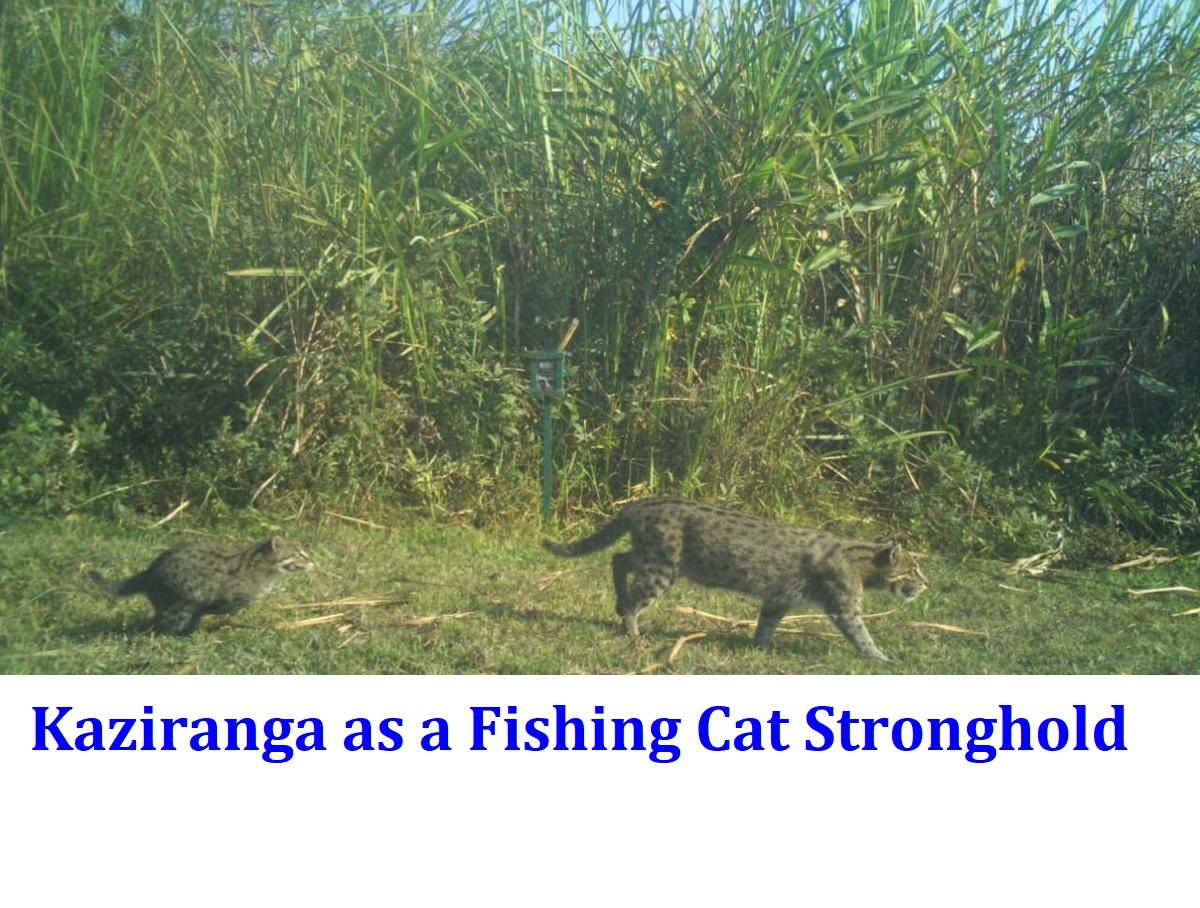
Kaziranga as a Fishing Cat Stronghold
ANALYSIS
• The first scientific assessment of the fishing cat (Prionailurus viverrinus) has established Kaziranga National Park and Tiger Reserve as a major stronghold of the species.
• The study was conducted using camera-trap images from the All-India Tiger Estimation data by Kaziranga’s Tiger Cell in collaboration with the Fishing Cat Project.
• A total of 57 unique individuals were identified across more than 450 sq. km, indicating:
– A healthy and reproducing population
– Wide distribution across the tiger reserve
– Possible underestimation due to tiger-focused camera grid design
• The fishing cat is classified as Globally Vulnerable and is protected under Schedule I of the Wildlife Protection Act, 1972 (highest legal protection in India).
• The findings position Kaziranga as a critical conservation site for wetland-dependent carnivores in the Brahmaputra floodplains.
• Among floodplain ecosystems, Kaziranga has one of the highest recorded populations.
• Other major freshwater habitats:
– Kishanpur Wildlife Sanctuary (35–51)
– Dudhwa National Park (35–51)
– Pilibhit Tiger Reserve (14–17)
– Katerniaghat Wildlife Sanctuary (12–14)
– Valmiki Tiger Reserve (6–7)• Major estuarine habitats:
– Sunderban Tiger Reserve (385)
– Chilika Lagoon (341)
– Bhitarkanika National Park and Wildlife Sanctuary (83–115)
– Coringa Wildlife Sanctuary (95–100)• Ecological significance:
– The fishing cat is one of the few felids adapted to aquatic hunting.
– Acts as an indicator of wetland ecosystem health.
– Symbolically known as “Meseka” in Assamese folklore.
• Threats:
– Habitat loss
– Hunting
– River modifications and climate change
– Global disappearances in Vietnam and Java highlight South Asia as its core population zone
• Optimal habitats include:
– Wet alluvial grasslands
– Shallow beels (wetlands)
– Wet meadows
– Woodland refugia aiding flood survival
• Conservation relevance:
– Strengthens importance of wetland conservation under climate stress.
– Highlights need for species-specific monitoring beyond tiger-centric conservation frameworks.
STATIC PARTFishing Cat (Prionailurus viverrinus)
• IUCN Status: Vulnerable
• Indian Protection Status: Schedule I, Wildlife Protection Act, 1972
• Habitat: Wetlands, floodplains, estuaries, mangroves
• Distribution: Primarily South Asia (India holds core population)
• Adaptation: Semi-aquatic hunter with partially webbed feet
Kaziranga National Park & Tiger Reserve
• Located in Assam in the Brahmaputra floodplains
• UNESCO World Heritage Site
• Known for one-horned rhinoceros
• Grassland-wetland ecosystem with high biodiversity
Updated - 23 February 2026; 03:17 PM IST | News Source: The Hindu