NASA’s Lunar Trailblazer Moon Mission Ends
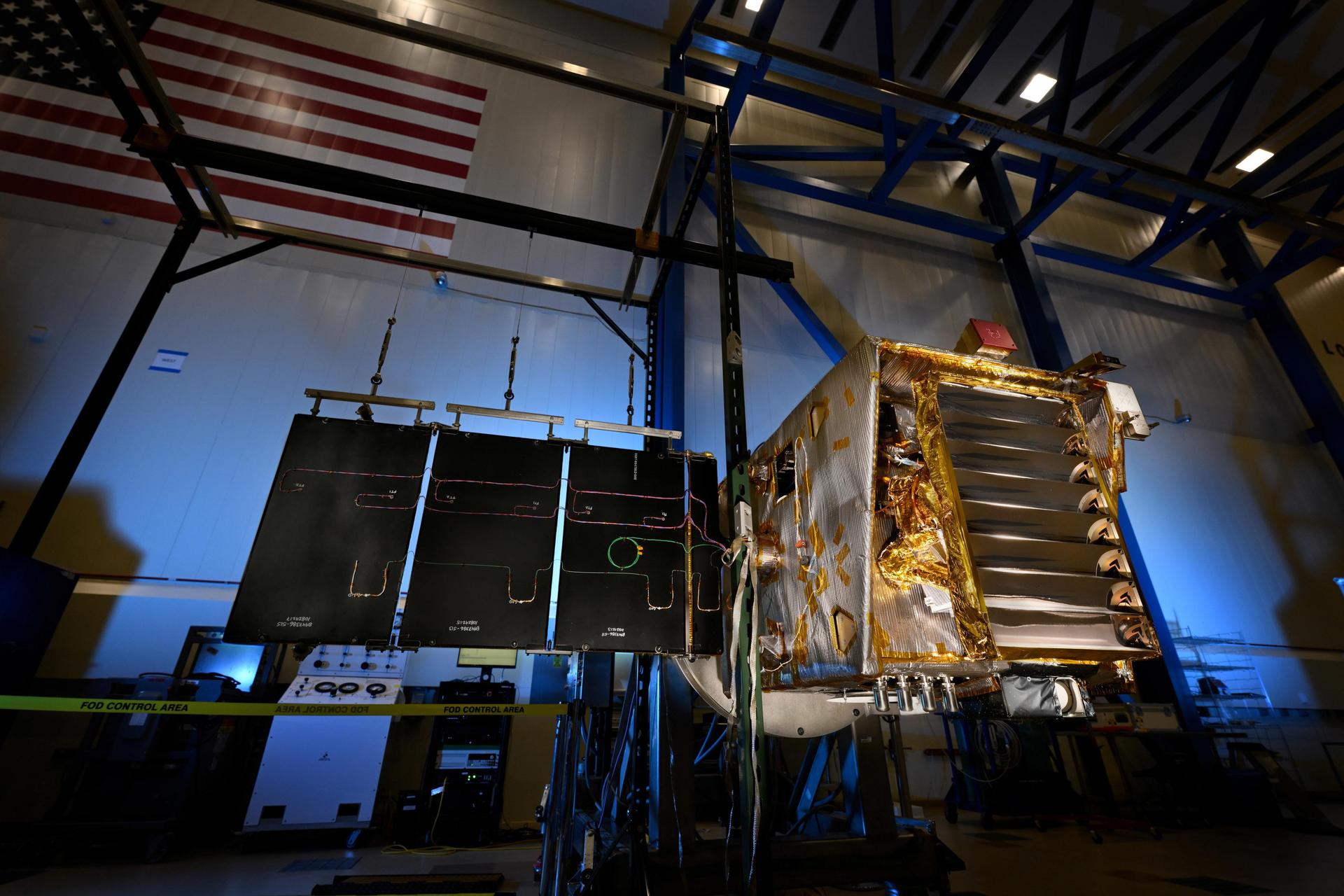
IN NEWS
NASA’s Lunar Trailblazer Moon Mission Ends
ANALYSIS
- NASA formally ended the Lunar Trailblazer mission on 31 July 2025 after repeated attempts failed to re-establish communication with the spacecraft.
- The small satellite lost contact one day after its launch on 26 February 2025, and two-way communication could not be restored.
- Lunar Trailblazer was designed to create high-resolution global maps of water on the Moon, identifying its form, quantity, and temporal variability.
- The mission would have supported future robotic and human lunar exploration, commercial lunar activities, and scientific understanding of water cycles on airless bodies.
- The spacecraft launched as a rideshare payload with Intuitive Machines’ IM-2 lunar lander aboard a SpaceX Falcon 9 from Kennedy Space Center.
- Initial contact was established, but telemetry later indicated that the solar arrays were not properly oriented, leading to battery depletion.
- International tracking efforts suggested the spacecraft entered a slow spin and drifted into deep space, making recovery impossible as signal strength weakened.
- Despite mission loss, NASA emphasized the value of high-risk, high-reward SIMPLEx missions in advancing low-cost planetary science and technology demonstration.
NECESSARY STATIC PART
- Mission Type: Lunar science orbiter (small satellite)
- Programme: SIMPLEx (Small Innovative Missions for Planetary Exploration)
- Primary Objective: Mapping lunar surface water and understanding its distribution and evolution
- Key Instruments:
- HVM3 (High-resolution Volatiles and Minerals Moon Mapper): Built by NASA JPL to detect water and minerals
- LTM (Lunar Thermal Mapper): Developed by the University of Oxford, funded by the UK Space Agency, to study surface temperature and silicate composition
- Lead Institutions:
- Science leadership: Caltech
- Mission operations: Caltech IPAC
- Spacecraft development: Lockheed Martin Space
- Mission management: NASA Planetary Missions Program Office (Marshall Space Flight Center)
- Technological Legacy:
- HVM3 design to be reused in UCIS-Moon, selected for a future NASA lunar orbital mission
- Strengthened collaboration model for international tracking and recovery efforts
Updated – 04 August 2025 ; 08:30 PM IST | News Source: NASA – Jet Propulsion Laboratory