Protection of the Aravalli Range
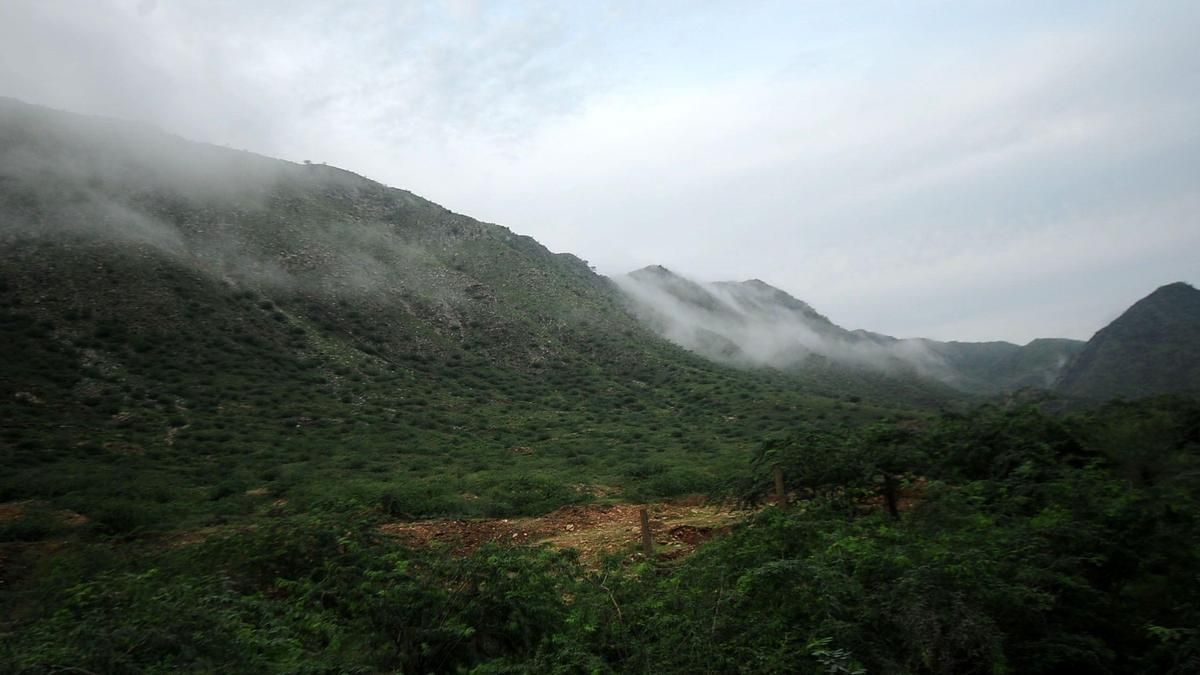
IN NEWS: Protection of the Aravalli Range
Analysis
Why the Aravalli Range Is in News?
- The Supreme Court has settled a uniform definition of the Aravalli hills and ranges.
- The Court has paused the grant of fresh mining leases and renewals in Aravalli areas across Delhi, Haryana, Rajasthan and Gujarat.
- The decision follows recommendations of the Central Empowered Committee (CEC) amid concerns over ecological degradation, illegal mining and desertification.
What Is the Aravalli Range?
- The Aravalli Range is one of the oldest mountain ranges in the world.
- It stretches for about 650–670 km, from Delhi to Gujarat.
- It acts as a natural ecological barrier between the Thar Desert and the Indo-Gangetic Plains.
Static Geography: Aravalli Range (For Prelims & Mains)
Physical Features
- Type: Fold mountain
- Geological age: Proterozoic era
- Direction: South-west trending
- Highest Peak: Guru Shikhar (1,722 metres), located in the Arbuda Mountains, Rajasthan
- Mountain Sections:
- Sambhar–Sirohi Range: Higher and more continuous; includes Guru Shikhar
- Sambhar–Khetri Range: Discontinuous, composed of three ridges
Geological Formation
- Part of the Aravalli–Delhi Orogenic Belt.
- Formed due to tectonic plate collision during the Proterozoic era.
- Constitutes a component of the Indian Shield, created through ancient cratonic collisions.
- Originally very high mountains, but heavily eroded over millions of years due to weathering.
Drainage System
- Major rivers originating from the Aravalli Range:
- Banas River (tributary of Chambal → Yamuna)
- Sahibi River (tributary of Yamuna)
- Luni River, flowing towards the Rann of Kutch
Mineral Resources
- Rich in:
- Copper
- Zinc
- Lead
- Marble
- Historical and modern mining activities have heavily exploited these resources.
Ecological Significance
- Prevents the eastward spread of desertification into Haryana, Rajasthan and western Uttar Pradesh.
- Plays a critical role in:
- Groundwater recharge
- Climate moderation
- Biodiversity conservation
- Supports forest ecosystems, wildlife corridors and aquifer recharge zones.
- India is bound to protect the region under the UN Convention to Combat Desertification (UNCCD).
Mining and Environmental Concerns
- Excessive quarrying over the last four decades has led to:
- Falling groundwater levels
- Deteriorating air quality
- Loss of forest cover and wildlife habitats
- Illegal and unregulated mining has been a persistent issue.
Supreme Court and CEC Interventions
- 2009: Blanket ban on mining in parts of Haryana (Faridabad, Gurugram, Mewat).
- May 2024: Prohibition on new mining leases and renewals.
- March 2024: CEC submitted recommendations.
- November 2025: Supreme Court accepted key CEC recommendations.
Uniform Definition of the Aravalli Range
- Earlier definitions varied across States and institutions.
- The Forest Survey of India (2010) used criteria based on slope, foothill buffer and valley width.
- A multi-agency committee submitted a new definition in October 2025.
- The Supreme Court accepted the definition that only hills above 100 metres qualify as Aravalli hills and ranges.
Other Directions of the Supreme Court
- Preparation of a Management Plan for Sustainable Mining (MPSM).
- Identification of:
- No-mining zones
- Highly regulated mining zones
- Wildlife corridors and sensitive habitats
- Assessment of cumulative ecological impacts and carrying capacity.
Aravalli Green Wall Initiative
- Launched in June 2025.
- Focuses on expanding green cover in a 5 km buffer zone.
- Covers 29 districts across four States.
- Aims to restore 26 million hectares of degraded land by 2030.
Why a Total Mining Ban Was Avoided
- Complete bans often lead to:
- Illegal mining syndicates
- Sand mafias
- Unregulated extraction
- The Court adopted a regulated, calibrated approach instead.
Way Forward
- Completion of scientific mapping and impact assessments.
- Strengthened inter-State coordination.
- Strict enforcement of sustainable mining norms.
- Long-term ecological restoration and groundwater recharge.
- Integration of conservation objectives into regional development planning.
Updated – 21 December 2025; 6:43 PM | News Source: The Hindu
Aravalli Range Indian Geography Oldest Mountain Range of India Fold Mountains Proterozoic Era Aravalli Delhi Orogenic Belt Indian Shield Desertification Control Thar Desert Indo Gangetic Plain Groundwater Recharge Biodiversity Conservation Sustainable Mining Environmental Governance Supreme Court Environment Judgments Central Empowered Committee Forest Survey of India Environmental Impact Assessment UN Convention to Combat Desertification Aravalli Green Wall Project Indian Environment Notes UPSC Geography UPSC Environment BPSC Geography State PCS Environment