Two New Wetlands Earn Ramsar Tag, Taking India’s Count To 96
IN NEWS : Two New Wetlands Earn Ramsar Tag, Taking India’s Count To 96
Analysis:
- India has added two new wetlands—Siliserh Lake in Rajasthan and Kopra Jalashay in Chhattisgarh—to the list of Ramsar sites, taking the country’s total to 96 wetlands of international importance.
- The addition further strengthens India’s position among the leading nations globally in terms of Ramsar-designated wetlands.
- Siliserh Lake, located in Alwar district, Rajasthan, is a historic, man-made lake constructed in 1845 to supply water to Alwar city and is situated near the Aravalli hills and Sariska Tiger Reserve.
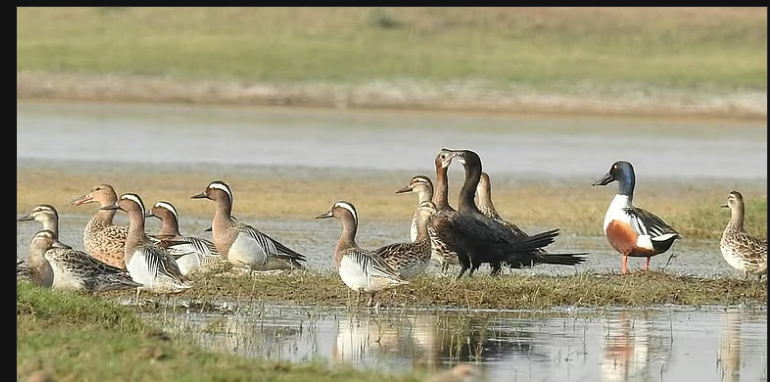
- The lake supports resident and migratory birds and plays an important role in regional biodiversity as well as local water security.
- Kopra Jalashay, located in Bilaspur district, has become Chhattisgarh’s first Ramsar site, highlighting the ecological value of managed and man-made freshwater wetlands.
- Kopra Jalashay supports migratory birds, fish populations, and livelihoods linked to fishing and agriculture, and contributes to regional water management.
- India’s expanding Ramsar footprint reflects growing policy recognition of wetlands as critical ecosystems for biodiversity conservation, climate resilience, and sustainable livelihoods.
Static Background:
- The Ramsar Convention on Wetlands is an international treaty adopted in 1971 for the conservation and wise use of wetlands.
- India became a signatory to the Ramsar Convention in 1982.
- A wetland must satisfy at least one of nine Ramsar criteria, such as supporting threatened species, large congregations of waterbirds, or key ecological functions.
- Once designated, countries commit to maintaining the ecological character of the site while allowing sustainable and community-oriented use.
- Wetlands play a vital role in flood regulation, groundwater recharge, carbon storage, fisheries, and habitat provision.
Updated - 19 December 2025; 04:13 PM | News Source: Outlook Traveller