- Apical meristematic tissue → Located at the growing tips of stems and roots.
- Parenchyma → Most common simple permanent tissue, made of living thin-walled cells, involved in storage, photosynthesis & secretion, generally isodiametric in shape.
- Aerobic respiration → Releases significantly more energy than anaerobic process.
- ATP (Adenosine Triphosphate) → Broken down to release a fixed amount of energy to drive endothermic cellular reactions.
मुख्य कार्य (Functions):- ऊर्जा का भंडारण (Energy storage): कोशिकाओं की सभी गतिविधियों के लिए ऊर्जा का मुख्य स्रोत।
- ऊर्जा की आपूर्ति (Energy supply): श्वसन (Respiration), मांसपेशियों का संकुचन, सक्रिय परिवहन, और रासायनिक प्रतिक्रियाओं के लिए।
- ऊर्जा रिलीज़ (Energy release): जब ATP का तीसरा फॉस्फेट समूह टूटता है (ATP → ADP + P) तो ऊर्जा निकलती है।
- Pyruvate → A three-carbon molecule, converted into lactic acid (three-carbon) during anaerobic respiration.
- Pistil → Female reproductive part of flower consisting of stigma, style & ovary.
- पिस्टिल फूल का स्त्रीलिंग प्रजनन अंग (female reproductive part) है।
- यह बीज का निर्माण (Seed formation) करने में मदद करता है।
- संरचना (Structure):
पिस्टिल मुख्यतः तीन भागों में होता है:- स्ताइग्मा (Stigma):
- फूल का ऊपरी भाग
- पराग (Pollen grains) को पकड़ता है
- स्टाइल (Style):
- लंबी पतली संरचना
- पराग कणों को अंडाशय तक ले जाता है
- अंडाशय (Ovary):
- पिस्टिल का निचला हिस्सा
- अंडाणु (Ovules) रखता है, जो निषेचन के बाद बीज बनते हैं
- स्ताइग्मा (Stigma):
- मुख्य कार्य (Functions):
- पराग ग्रहण करना (Reception of pollen) – Stigma पर
- पराग का मार्गदर्शन (Guidance of pollen) – Style के माध्यम से
- बीज और फल का निर्माण (Seed and fruit formation) – Ovary में
- Ovary → Swollen base of pistil containing ovules, matures into a fruit after fertilization.
- Style → Slender stalk connecting stigma to ovary, provides path for pollen tube growth.
- Stigma → Top sticky part of pistil that receives and traps pollen grains.
- Ovule → Structure inside ovary that develops into a seed after fertilization, contains female gametophyte (egg cell).
- Saccharomyces cerevisiae → Commonly known as baker’s yeast, used in baking and brewing fermentation.
- Plastids → Plant cell organelles responsible for photosynthesis, storage & synthesis of compounds.
परिभाषा:
प्लास्टिड्स पौधों की कोशिकाओं में पाए जाने वाले विशेष अंगक (cell organelles) हैं।
ये मुख्य रूप से भोजन बनाने और संग्रह करनेका काम करते हैं।- कहाँ पाए जाते हैं?
- केवल पौधों और शैवाल (Algae) की कोशिकाओं में
- पशु कोशिकाओं में नहीं पाए जाते
प्लास्टिड्स के प्रकार:
- क्लोरोप्लास्ट (Chloroplast)
- हरे रंग के होते हैं (क्लोरोफिल के कारण)
- प्रकाश संश्लेषण (Photosynthesis) करते हैं
- सूर्य के प्रकाश से भोजन बनाते हैं
- क्रोमोप्लास्ट (Chromoplast)
- लाल, पीले, नारंगी रंग देते हैं
- फूलों और फलों को रंगीन बनाते हैं
- ल्यूकोप्लास्ट (Leucoplast)
- रंगहीन होते हैं
- भोजन का भंडारण करते हैं (स्टार्च, तेल, प्रोटीन)
- कहाँ पाए जाते हैं?
मुख्य कार्य:
- भोजन बनाना
- भोजन का संग्रह करना
- पौधों को रंग प्रदान करना
- Chloroplasts → Type of plastid containing chlorophyll, convert light energy into chemical energy during photosynthesis.
- Root cap → Helps in easy root movement through soil, protects tender root tip, and aids in gravity perception.
रूट कैप (Root Cap)- परिभाषा:
रूट कैप जड़ (root) के सबसे आगे वाले सिरे पर पाई जाने वाली टोपी जैसी संरचना है। - स्थान (Location):
- जड़ के नुकीले सिरे पर
- मेरिस्टेमेटिक ऊतक (Meristematic tissue) के आगे
- परिभाषा:
मुख्य कार्य (Functions):
- सुरक्षा (Protection):
- जड़ के कोमल बढ़ते भाग को मिट्टी से बचाती है।
- मिट्टी में प्रवेश में मदद (Penetration):
- जड़ को मिट्टी में आसानी से घुसने में सहायता करती है।
- चिकनाई प्रदान करना (Lubrication):
- म्यूकिलेज (चिपचिपा पदार्थ) स्रावित करती है, जिससे घर्षण कम होता है।
- गुरुत्वाकर्षण का अनुभव (Geotropism):
- जड़ को नीचे की ओर बढ़ने में मदद करती है।
- जड़ को नीचे की ओर बढ़ने में मदद करती है।
- सुरक्षा (Protection):
- Photosynthesis → Process where plants convert CO₂ + H₂O into glucose + O₂ using sunlight.
- Photosynthesis equation → 6CO₂ + 6H₂O → C₆H₁₂O₆ + 6O₂ (involves reduction of carbon dioxide).
Botany
- Cytokinins → Promote cell division, delay aging of plant tissues, inhibit protein degradation, and promote protein synthesis & nutrient mobilization.
यह क्या करता है?- 🌱 नई कोशिकाएँ बनवाता है
जहाँ पौधा तेजी से बढ़ रहा होता है (जैसे जड़ और तने के सिरे), वहाँ साइटोकिनिन ज्यादा पाया जाता है। - 🌿 नई शाखाएँ निकलने में मदद करता है
यह पौधे को घना और झाड़ीदार बनाता है। - 🍃 पत्तियों को हरा और ताज़ा रखता है
पत्तियों के जल्दी पीले होने (बुढ़ापा) को रोकता है। - ⚖️ ऑक्सिन के साथ मिलकर काम करता है
- ऑक्सिन + साइटोकिनिन का संतुलन तय करता है कि
➜ जड़ बनेगी या
➜ तना/शाखा बनेगी
- ऑक्सिन + साइटोकिनिन का संतुलन तय करता है कि
- 🌱 नई कोशिकाएँ बनवाता है
- Auxins → Regulate cell elongation (stem & root tips) and control phototropism, gravitropism, lateral & adventitious root formation.
ऑक्सिन क्या करता है?- 🌱 तने की लंबाई बढ़ाता है
कोशिकाओं को लंबा होने में मदद करता है। - 🌞 प्रकाश की ओर झुकाव (Phototropism)
पौधा रोशनी की तरफ क्यों झुकता है?
➜ क्योंकि ऑक्सिन छायादार भाग में जमा होकर उस हिस्से की कोशिकाओं को ज्यादा बढ़ाता है। - 🌍 गुरुत्वाकर्षण के विरुद्ध वृद्धि (Gravitropism)
जड़ नीचे और तना ऊपर क्यों बढ़ता है?
➜ इसमें भी ऑक्सिन की भूमिका होती है। - 🌿 नई जड़ों के निर्माण में मदद
कटिंग से पौधा उगाने में ऑक्सिन उपयोगी होता है।
- 🌱 तने की लंबाई बढ़ाता है
- Abscisic Acid (ABA) → Functions in stress response, closes stomata during water stress, promotes seed dormancy and inhibits growth.
ABA क्या करता है?- 🚫 वृद्धि को रोकता है
यह पौधे की वृद्धि को धीमा या नियंत्रित करता है। - 🌵 सूखे में मदद करता है
जब पानी की कमी होती है, तो ABA
➜ रंध्र (Stomata) बंद कर देता है
➜ ताकि पानी की हानि कम हो। - 🌾 बीज और कली को निष्क्रिय (Dormant) रखता है
- बीज जल्दी अंकुरित न हो
- कली समय से पहले न फूटे
- 🍂 पत्तियों के गिरने में भूमिका
पत्तों के झड़ने (abscission) से जुड़ा होता है।
🧠 याद रखने की ट्रिक
👉 “ABA = Growth को रोके और सूखे में बचाए”या👉 “ABA = Anti Growth Hormone”
- 🚫 वृद्धि को रोकता है
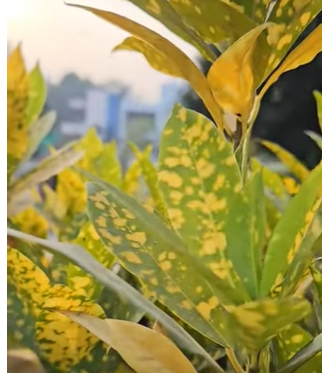
- Variegated leaves → Leaves with multiple colors (green with white/yellow patterns); Croton is a popular ornamental example.
- Gibberellins → Promote stem growth by cell elongation and division.
जिबरेलिन्स क्या करते हैं?- 🌱 तने की लंबाई बढ़ाते हैं
पौधा जल्दी और ज्यादा लंबा होता है। - 🌾 बीज अंकुरण (Seed Germination) में मदद
बीज को निष्क्रिय अवस्था (Dormancy) से बाहर लाते हैं। - 🌸 फूल और फल के विकास में मदद
कुछ पौधों में फूल आने को प्रेरित करते हैं। - 🍇 फल का आकार बढ़ाते हैं
अंगूर जैसे फलों को बड़ा बनाने में प्रयोग किया जाता है। - 🌿 बौने पौधों को लंबा बनाना
जिबरेलिन देने से बौने पौधे भी लंबे हो सकते हैं।
- 🌱 तने की लंबाई बढ़ाते हैं
- Cytokinins → Promote cell division and delay leaf aging.
- Abscisic acid → Inhibits growth and promotes dormancy in seeds and buds.
- Growth Hormone → Produced by pituitary gland, stimulates growth of organs & tissues, promotes protein synthesis & muscle mass increase.
- Adrenaline (Epinephrine) → Produced by adrenal glands, activates fight-or-flight response, increases heart rate & blood flow to muscles.
एड्रेनालिन एक हार्मोन है जो हमारे शरीर में आपातकालीन स्थिति (Emergency) में काम करता है।इसे “Fight or Flight Hormone”कहा जाता है।📍 कहाँ बनता है?- अधिवृक्क ग्रंथि (Adrenal Gland) में
- विशेष रूप से Adrenal Medulla में
📌 एड्रेनालिन क्या करता है?
- ❤️ दिल की धड़कन तेज करता है
ताकि शरीर को ज्यादा खून और ऑक्सीजन मिले। - 🫁 सांस तेज कर देता है
फेफड़े ज्यादा ऑक्सीजन लेते हैं। - 🩸 ब्लड प्रेशर बढ़ाता है
- 🍬 रक्त में ग्लूकोज बढ़ाता है
तुरंत ऊर्जा देने के लिए। - 👀 सतर्कता बढ़ाता है
शरीर को खतरे से निपटने के लिए तैयार करता है।
- ❤️ दिल की धड़कन तेज करता है
- Glucagon → Produced by pancreas, increases blood glucose by converting glycogen to glucose in liver.
📍 कहाँ बनता है?- अग्न्याशय (Pancreas) में
- विशेष रूप से Islets of Langerhans की Alpha (α) कोशिकाओं में
📌 ग्लूकागन क्या करता है?
- 🍞 ब्लड शुगर बढ़ाता है
जब शरीर में शुगर कम हो जाती है, तब यह काम करता है। - 🏪 लिवर में जमा ग्लाइकोजन को ग्लूकोज में बदलता है
(Glycogen → Glucose) - ⚡ शरीर को तुरंत ऊर्जा देता है
खासकर उपवास (Fasting) या भूख की स्थिति में।
- 🍞 ब्लड शुगर बढ़ाता है
🧠 कब निकलता है?
- जब रक्त में शर्करा कम हो (Hypoglycemia)
- लंबे समय तक भोजन न मिलने पर
- उपवास के दौरान
🔄 इंसुलिन से संबंध
- इंसुलिन → ब्लड शुगर कम करता है
- ग्लूकागन → ब्लड शुगर बढ़ाता है
- 👉 दोनों मिलकर शरीर में शुगर का संतुलन बनाए रखते हैं।
- Xylem → Vascular tissue conducting water & nutrients from roots; main elements are vessels & tracheids.
- Meristematic tissue → Cells are highly active, show continuous cell division, have dense cytoplasm and thin cellulose walls.
- Parenchyma cells → Most common plant cells, thin walls, large central vacuole, involved in storage, photosynthesis & repair.
पैरेंकाइमा कोशिकाएँ (Parenchyma Cells)- संरचना (Structure):
- पतली कोशिका भित्तियाँ (cell wall) होती हैं।
- इनमें साइटोप्लाज्म, न्यूक्लियस और वेसिकल (vacuole) मौजूद होते हैं।
- स्थान (Location):
- पत्तों की मेसोफिल (leaf mesophyll)
- कार्य (Functions):
- भंडारण (Storage): पानी, स्टार्च, तेल, प्रोटीन इत्यादि।
- सपोर्ट (Support): पौधे को ढांचा और लचीलापन देने में मदद।
- फोटोसिंथेसिस (Photosynthesis): हरे पत्तों में क्लोरोप्लास्ट की वजह से।
- संरचना (Structure):
- Collenchyma cells → Provide structural support to growing parts, have thicker walls, found in stems & leaves.
- Sclerenchyma cells → Have thick lignified walls, provide mechanical support, found in non-growing regions (bark & mature stems).
- Bryophyllum → New plants develop from notches at leaf margins.
ब्रायोफिलम (Bryophyllum)- परिभाषा:
ब्रायोफिलम एक रसदार (succulent) पौधा है जो अपनी पत्तियों से नए पौधे उगाता है। - विशेषता:
- इसकी पत्तियों के किनारों (edges) पर छोटी-छोटी कलिकाएँ (buds) बनती हैं।
- ये कलिकाएँ जमीन पर गिरकर नया पौधा बना देती हैं।
- परिभाषा:
- Mendel → Studied visible characters (flower color, seed shape) in pea plants.
- Budding → Asexual reproduction where new organism develops from an outgrowth due to cell division at one site, common in Hydra and some plants.
- Reserpine → An indole alkaloid drug obtained from dried roots of Rauwolfia serpentina, used to treat high blood pressure.
- Reserpine → Derived from Rauwolfia serpentina (Apocynaceae family).
- Rauwolfia serpentina → A medicinal plant, source of Reserpine, used for hypertension, also called Indian snakeroot / Sarpagandha.
- 2,4-D → A synthetic auxin herbicide, widely used to control broadleaf weeds.
- Herbicides → Chemicals used to control unwanted plants (weeds).
- Phyllotaxy → Pattern or arrangement of leaves on stem or branch.
Phyllotaxy का मतलब है —
👉 तने (stem) पर पत्तियों की व्यवस्था (Arrangement of leaves on stem) - Pectin → A heteropolysaccharide found in plant cell walls (middle lamella), strengthens and provides cohesion to tissues, composed of galacturonic acid units partially esterified with methanol.
- Pectin एक प्रकार का प्राकृतिक कार्बोहाइड्रेट (Polysaccharide) है जो पौधों की कोशिका भित्ति (Cell Wall)में पाया जाता है।
🌱 यह कहाँ पाया जाता है?
- फलों में अधिक मात्रा में
- खासकर:
- 🍎 सेब
- 🍊 संतरा
- 🍋 नींबू
🔹 पेक्टिन का काम क्या है?
कार्य सरल समझ कोशिकाओं को जोड़ना पौधों की कोशिकाओं को आपस में चिपकाए रखता है संरचना देना फल को आकार और मजबूती देता है जैली बनाना जैम और जेली बनाने में मदद करता है - Mucin → A glycoprotein in mucus, protects and lubricates tissue surfaces.
🌿 COHESION–TENSION THEORY (1914)
- First detailed by H.H. Dixon (1914)
- Formulated by H.H. Dixon & J. Joly
- Explains ascent of sap in xylem
Cohesion–Tension Theory पौधों में पानी के ऊपर चढ़ने (ascent of sap) की प्रक्रिया को समझाती है। - Based on:
- Cohesion (water molecules stick together)
- Adhesion (water sticks to xylem walls)
- Transpiration pull
💧 GUTTATION
- Loss of plant sap as water droplets
- Occurs through hydathodes
- Guttation वह प्रक्रिया है जिसमें पौधे की पत्तियों के किनारों से पानी की बूंदें सीधे बाहर निकलती हैं।
🌿 यह कब होता है?
- रात के समय 🌙
- जब मिट्टी में पानी अधिक हो
- जब वाष्पोत्सर्जन (Transpiration) कम हो
- Happens when:
- Transpiration is low
- Root pressure is high
🌾 GIBBERELLIC ACID
- Discovered by Eiichi Kurosawa (1926)
- While studying “Foolish seedling disease” in rice
- Caused by fungus Gibberella fujikuroi
- Fungus secretes growth-promoting substance → Gibberellin
Gibberellic Acid (GA) एक पौध हार्मोन (Plant Hormone) है जो पौधों की वृद्धि (growth) को बढ़ाता है।
🌱 EPIDERMIS
- Outermost protective layer of plant body
- Present in leaves, stems, roots
Epidermis पौधे का सबसे बाहरी सुरक्षात्मक ऊतक (outer protective tissue) होता है। - Functions:
- Prevents water loss
- Protects from pathogens
- Guards against injury
🌿 CYTOKININS
- Plant hormones promoting cell division (cytokinesis)
- High in meristematic tissues
- Work with auxins
- Help in:
- Cell division
- Differentiation
- Shoot growth
🍞 CARBOHYDRATE STORAGE
- Glucose produced in photosynthesis
- Used immediately for energy
- Excess converted into starch
- Starch = long-term energy reserve
- Used during night / winter
🌾 PHLOEM TRANSPORT
- Transports organic solutes
- Main substance: Sucrose
- Also transports amino acids
- Process called Translocation
- Supplies roots, fruits, non-green parts
🔄 BASIC BIOLOGY CORRECTIONS
- Translocation → transport of soluble products of photosynthesis
- Respiration → breakdown of glucose for energy
- Transpiration → loss of water through stomata
- Photosynthesis requires sunlight
🌳 CAMBIUM
- Actively dividing layer
- Cambium एक प्रकार का विभज्योतक ऊतक (Meristematic Tissue) है, जो पौधों में मोटाई (secondary growth)बढ़ाने का काम करता है।
🌱 Cambium कहाँ पाया जाता है?
- तने (Stem) में
- जड़ (Root) में
- खासकर द्विबीजपत्री (Dicot) पौधों में
- Located between xylem and phloem
- Responsible for secondary growth
🌸 OVARY → FRUIT
- Ovary contains ovules
- After fertilization:
- Ovules → Seeds
- Ovary wall → Fruit
- Function: Protection & dispersal
🍞 RHIZOPUS
- Common saprophytic fungus
- Known as Bread mould
- Belongs to Zygomycetes
🌿 TENDRILS & TROPISM
- Tendrils help climbing
- Growth response = Tropism
- Phototropism → Light
- Gravitropism → Gravity
🌿 AUXINS
- Produced in apical meristems
- Promote cell elongation
- Regulate:
- Phototropism
- Gravitropism
- Loosen cell walls for expansion
🐙 HYDRA REPRODUCTION
- Asexual reproduction by Budding
- Bud grows on parent
- Detaches when mature
- Belongs to Phylum Cnidaria
🌿 PLANTS vs ANIMALS (ENERGY & TRANSPORT)
- Plants = Autotrophic
- Produce own food (photosynthesis)
- Transport via:
- Xylem
- Phloem
- Transport slower than animal circulatory system
CohesionTensionTheory HHDixon JJoly AscentOfSap XylemTransport TranspirationPull Guttation RootPressure Hydathodes GibberellicAcid EiichiKurosawa FoolishSeedlingDisease GibberellaFujikuroi PlantHormones Cytokinins Auxins CellDivision CellElongation Meristem Phototropism Gravitropism Epidermis Cambium SecondaryGrowth OvaryToFruit OvulesToSeeds PhloemTransport TranslocationInPlants SucroseTransport AminoAcidTransport Photosynthesis Respiration Transpiration StarchStorage CarbohydrateMetabolism Rhizopus BreadMould Zygomycetes Tendrils Tropism Hydra Budding AsexualReproduction Cnidaria PlantPhysiology BotanyNotes BiologyRevision
Comments